AP® Psychology Unit 1: 10 practice questions, game style
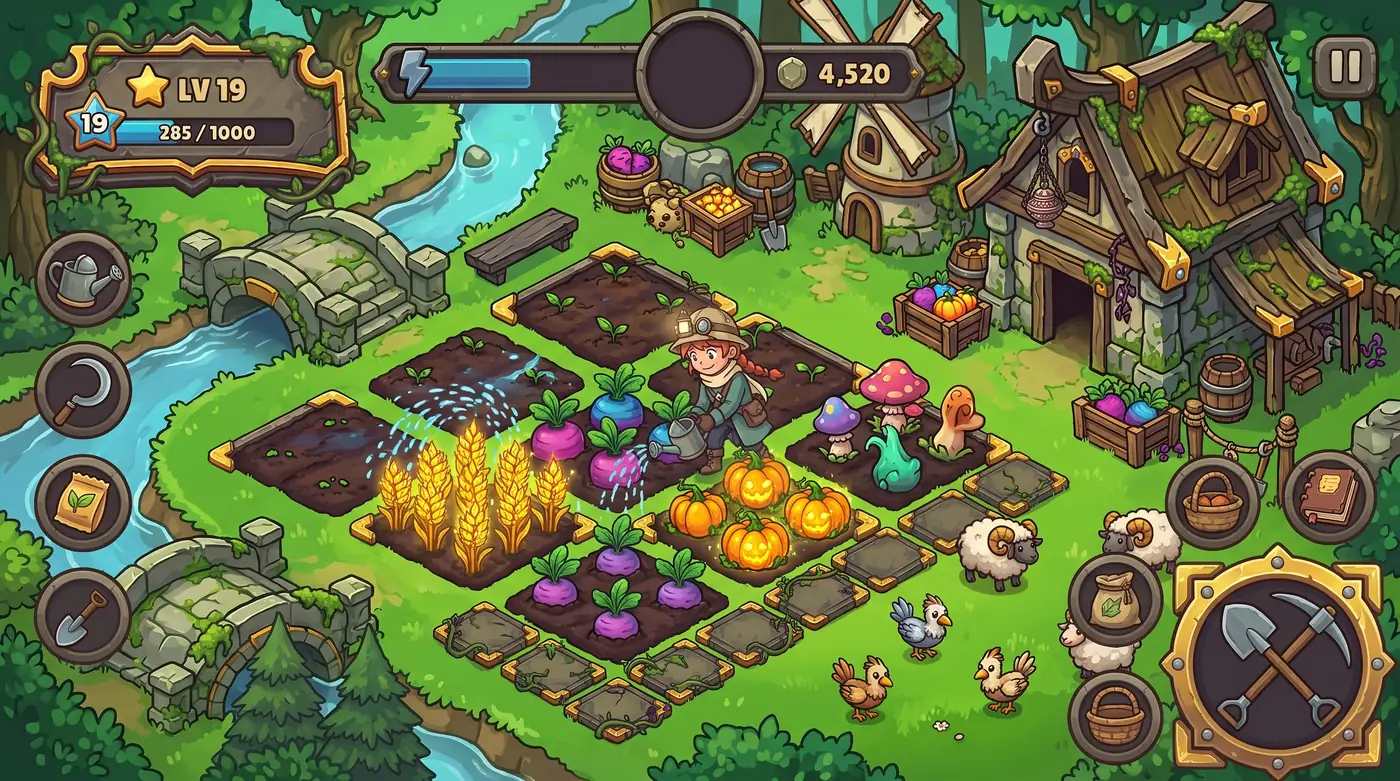
Here are 10 AP® Psychology Unit 1 practice questions, written the way GameTheTest asks them in the game. Each one is a short scenario that never names the term. You pick the concept it shows, then check the answers at the end for how you can tell and the mistake most students make.
The 10 practice questions below are GameTheTest's own scenarios, not College Board questions. Try each question before you look at the answers.
What's in AP® Psychology Unit 1?
Unit 1 is Biological Bases of Behavior. In the current College Board course framework it has six topics:
- 1.1 Interaction of Heredity and Environment
- 1.2 Overview of the Nervous System
- 1.3 The Neuron and Neural Firing, which includes how psychoactive drugs work
- 1.4 The Brain
- 1.5 Sleep
- 1.6 Sensation
The College Board weights Unit 1 at 15 to 25 percent of the multiple-choice section. The 10 questions below cover all six topics.
How does the game ask a question?
Every concept in GameTheTest has a scenario that shows the concept without naming it. The scenarios are on purpose: the AP® Psychology exam gives you a situation, not a definition, so GameTheTest practices situations.
The game asks in two steps:
- Which concept does this show? You get the right term plus up to 3 lookalikes, the ones students mix up most.
- Which answer names the concept and gives the right reason? Now you need the term and the proof. The right term with a wrong reason gets half credit.
If you miss a question, GameTheTest teaches the concept before it moves on. You see what the term means, an example, how you can tell, a common mistake, and what each lookalike means. Then the missed question comes back after three others.
The 10 questions below are step one: naming the concept. The answer key gives the reason for each question, so you can check step two yourself.
The 10 practice questions
1. Heredity and environment
Among herding peoples who drank animal milk for thousands of years, adults carrying a gene to digest milk had more surviving children. Today that gene is common in those groups but rare elsewhere.
Which concept does this show?
- A. heritability
- B. eugenics
- C. natural selection
- D. evolutionary perspective
2. Heredity and environment
Researchers compared siblings born on the same day. Pairs who share all of their genes matched on anxiety far more often than same-day pairs who share only about half of their genes.
Which concept does this show?
- A. twin studies
- B. adoption studies
- C. heritability
3. The nervous system
A car horn blasts as Sam steps off the curb. His heart pounds, his breathing speeds up, his mouth goes dry, and his palms start to sweat.
Which concept does this show?
- A. somatic nervous system
- B. parasympathetic nervous system
- C. stimulants
- D. sympathetic nervous system
4. The neuron and neural firing
In a lab, a student slowly raises the voltage applied to a single neuron. The neuron stays quiet until one setting, then it fires. Doubling the voltage after that makes the signal no bigger.
Which concept does this show?
- A. action potential
- B. all-or-nothing principle
- C. refractory period
5. The neuron and neural firing
After a neuron releases serotonin into the gap, pumps on that same neuron pull the unused molecules back inside, ending the signal and saving the chemical to use later.
Which concept does this show?
- A. antagonist
- B. agonist
- C. reuptake
6. Psychoactive drugs
After knee surgery, Malik takes a prescribed painkiller. Its molecules fit into the same receptors as his body's natural pain-relieving chemicals and switch them on, dulling the pain.
Which concept does this show?
- A. agonist
- B. antagonist
- C. GABA
- D. reuptake
7. Psychoactive drugs
In September, one coffee kept Zoe alert through first period. By spring she needs three cups each morning to feel as awake as that single cup once made her.
Which concept does this show?
- A. withdrawal
- B. depressants
- C. sensory adaptation
- D. tolerance
8. The brain
After surgery removed tissue deep in both sides of his brain, a patient can still chat and recall his childhood, but forgets new people minutes after meeting them, even nurses he has seen for months.
Which concept does this show?
- A. amygdala
- B. hippocampus
- C. cerebellum
9. Sleep
During finals week, Bella slept four hours a night. On Saturday she sleeps eleven hours, and her sleep tracker shows she spent far more time than usual in the dreaming stage.
Which concept does this show?
- A. circadian rhythm
- B. REM sleep
- C. REM rebound
10. Sensation
In a dark, silent booth, Mateo hears beeps that get quieter each round. The softest beep he notices on about half of the trials marks the limit of his hearing for that pitch.
Which concept does this show?
- A. Weber's law
- B. absolute threshold
- C. sensory adaptation
Answers, with how you can tell
- C, natural selection. How you can tell: people who carried the milk gene left more surviving children, so the gene spread. A common mistake: thinking people who drank milk trained their bodies to digest it and passed that on. That misreads it.
- A, twin studies. How you can tell: pairs sharing all their genes matched more often than pairs sharing about half. A common mistake: thinking the pairs matched because they got the same style of parenting in the same home.
- D, sympathetic nervous system. How you can tell: his heart pounded and he began sweating the moment danger appeared. A common mistake: thinking his body was calming itself back down after the danger had passed. That's the parasympathetic system.
- B, all-or-nothing principle. How you can tell: past the trigger point, the signal stayed the same size no matter how strong the input. A common mistake: thinking the extra voltage did nothing because the neuron needed time to recover after firing.
- C, reuptake. How you can tell: the sending neuron pulled the unused chemical back in from the gap. A common mistake: thinking the receiving neuron soaked up the chemical.
- A, agonist. How you can tell: the drug fit into the receptors and switched them on, like the natural chemical. A common mistake: thinking the drug blocked the receptors. Blocking is what an antagonist does.
- D, tolerance. How you can tell: she needed more and more coffee to reach the same level of alertness. A common mistake: thinking she felt sick without coffee, so she kept drinking more. That's withdrawal.
- B, hippocampus. How you can tell: his old memories stayed, but he could no longer form lasting new ones. A common mistake: thinking the part that stores all old memories was removed. His old memories were fine.
- C, REM rebound. How you can tell: after nights of short sleep, her dream-stage time rose well above normal. A common mistake: thinking her long sleep came from her body clock shifting later on the weekend.
- B, absolute threshold. How you can tell: the faintest beep he caught about half of the time marked his cutoff. A common mistake: thinking it was the smallest change in loudness he could notice between two beeps. That's the just-noticeable difference, which Weber's law describes.
How should you use these practice questions?
Answer first, then check. Pulling an answer out of memory helps it stick better than reading it again. In one well-known study, students who took a practice test remembered more a week later than students who studied the text again (Roediger and Karpicke, 2006).
Then go back to the ones you missed, and don't just read the answer. Say the reason out loud. Step two in the game exists because a lot of students can name the term but can't prove it.
Where can you practice the rest of Unit 1?
In the game. GameTheTest has concepts from all six AP® Psychology Unit 1 topics, each with its own scenario, and you can play them in The Descent or on the Harvest Hollow farm.
The game picks what comes next for you. A miss comes back after three other questions. Concepts you haven't seen come before ones you have, and ones you haven't got right yet come before ones you have.
The free plan lets you pick any built-in AP® or language course starting at Unit 1 and unlock each unit as you master it, with 30 minutes of play a day plus 10 bonus minutes of Study Mode (grounded in distributed-practice research). Student Premium lets you jump straight into any unit right away with no daily limit. Here's how The Descent turns these questions into fights.
FAQ
Are these real AP® exam questions?
No. They're our own scenarios, written to match the College Board course framework for AP® Psychology. They aren't College Board items.
How many topics are in AP® Psychology Unit 1?
Six: heredity and environment, the nervous system, the neuron and neural firing, the brain, sleep, and sensation. Psychoactive drugs are part of the neuron topic.
Which Unit 1 concepts does GameTheTest cover?
Concepts from all six Unit 1 topics, each with its own scenario, a lookalike set, the reason that proves it, and the mistake students make most.
Can I practice Unit 1 for free?
Yes. Students are always free: pick any built-in AP® course starting at Unit 1 and unlock each unit through mastery, with 30 minutes of play a day plus 10 bonus minutes of Study Mode, and a free Parent Portal included.
Try it as a game
GameTheTest turns AP® Psychology, AP® Biology and IELTS review into games where every move is a practice question. The public alpha opens November 15, 2026. Student accounts are free; talk to a parent before anything paid.
Join the alpha free